
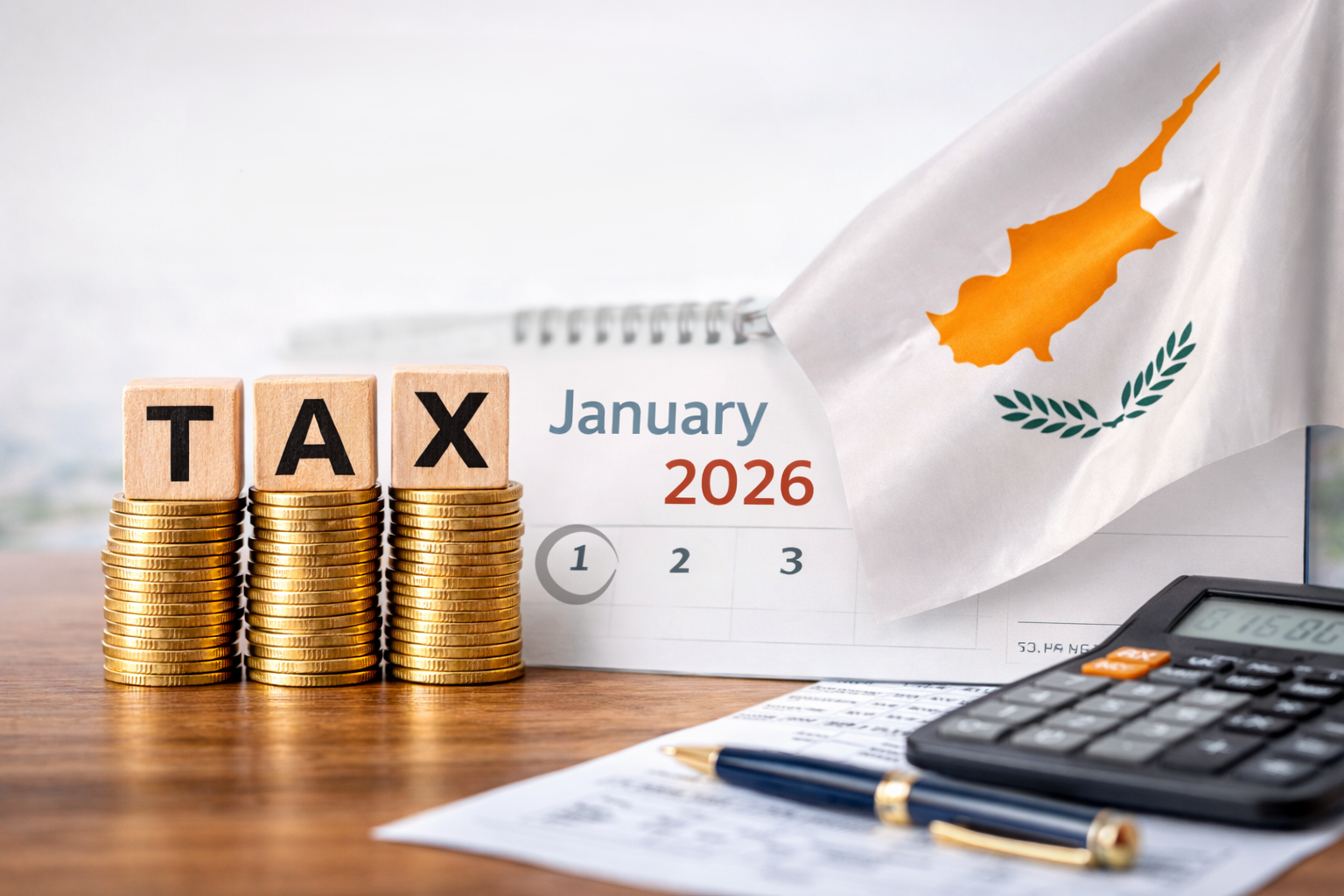
In December 2025, the House of Representatives approved a wide-ranging reform of Cyprus tax legislation, introducing material changes for both individuals and businesses. Most of the amendments take effect from 1 January 2026 and are aimed at modernising the tax framework, aligning Cyprus with international standards, and providing targeted relief to taxpayers.
Set out below is a summary of the principal changes, followed by a comparative table of the current tax position and the regime applicable from 2026.
Overview of the main changes
The reform impacts, among others:
- corporate income tax,
- personal income tax bands and thresholds,
- taxation of dividends and rental income,
- capital gains tax exemptions,
- stamp duty,
- crypto-asset disposals and stock options, and
- tax compliance and enforcement powers.
While some measures increase headline tax rates, others significantly reduce or abolish long-standing tax charges, particularly in relation to dividends, rental income and deemed dividend distribution.
Key tax rates and thresholds – current position vs 2026
| Tax / Area | Current position (up to 31.12.2025) | From 1 January 2026 |
| Corporate income tax | 12.5% | 15% |
| Personal income tax – bands | €0–€19,500: 0% €19,501–€28,500: 20% €28,501–€36,300: 25% €36,301–€60,000: 30% €60,001+: 35% |
€0–€22,000: 0% €22,001–€32,000: 20% €32,001–€42,000: 25% €42,001–€72,000: 30% €72,001+: 35% |
| Special Defence Contribution (SDC) on actual dividends (Cyprus-domiciled individuals) | 17% | 5% (for profits generated after 1.1.2026) |
| Deemed Dividend Distribution (DDD) | Applicable | Abolished for profits generated after 1.1.2026 |
| SDC on rental income | 3% on 75% of gross rent (effective rate 2.25%) | Abolished (rental income remains subject to income tax) |
| Capital Gains Tax – lifetime exemptions | General: €17,086 Agricultural land: €25,629 Primary residence: €85,430 |
General: €30,000 Agricultural land: €50,000 Primary residence: €150,000 |
| Stamp duty | Payable on certain instruments | Stamp Duty Law repealed – stamp duty abolished |
| Crypto-asset disposals | No specific flat regime | Flat 8% on profits (with same-year loss offset) |
| Carry-forward of tax losses | 5 years | 7 years |
Commentary on selected changes
Corporate taxation
The increase of the corporate income tax rate to 15% represents a notable shift in Cyprus’ traditionally low-tax environment. However, the abolition of the deemed dividend distribution rules and the substantial reduction in dividend SDC may mitigate the overall tax burden for certain shareholder structures, particularly owner-managed companies.
Personal income tax
Individuals benefit from an increased tax-free threshold and wider income brackets, with the highest marginal rate of 35% applying only to income exceeding €72,000. The reform also introduces additional allowances and deductions, subject to qualifying conditions and income criteria.
Dividends and rental income
The reduction of SDC on dividends to 5% and the abolition of SDC on rental income are among the most taxpayer-friendly elements of the reform. These changes are expected to have a significant impact on investment and holding structures involving Cyprus-domiciled individuals.
Capital gains and transactions
The increase in lifetime capital gains tax exemptions, particularly for primary residences, provides enhanced relief for individuals disposing of immovable property. The repeal of the Stamp Duty Law further reduces transactional costs in commercial and corporate arrangements.
New asset classes and compliance
The introduction of a flat tax regime for crypto-asset disposals reflects the legislator’s intention to address modern forms of investment. At the same time, the Tax Department is granted enhanced compliance and enforcement powers, underscoring the importance of timely filings and accurate reporting.
Conclusion
The 2026 tax reform represents one of the most significant overhauls of the Cyprus tax system in recent years. Its practical impact will depend on the taxpayer’s profile, residence and domicile status, income sources and corporate structure. Early planning will be essential in order to assess exposure and take advantage of the new rules.
For tailored advice on how these changes may affect you or your business, please contact our tax team.